Electric Stair Climber vs Hand Truck: Why Motorized Is the Future
Published: July 23, 2026 · Xi'an Chenma Materials Co., Ltd.
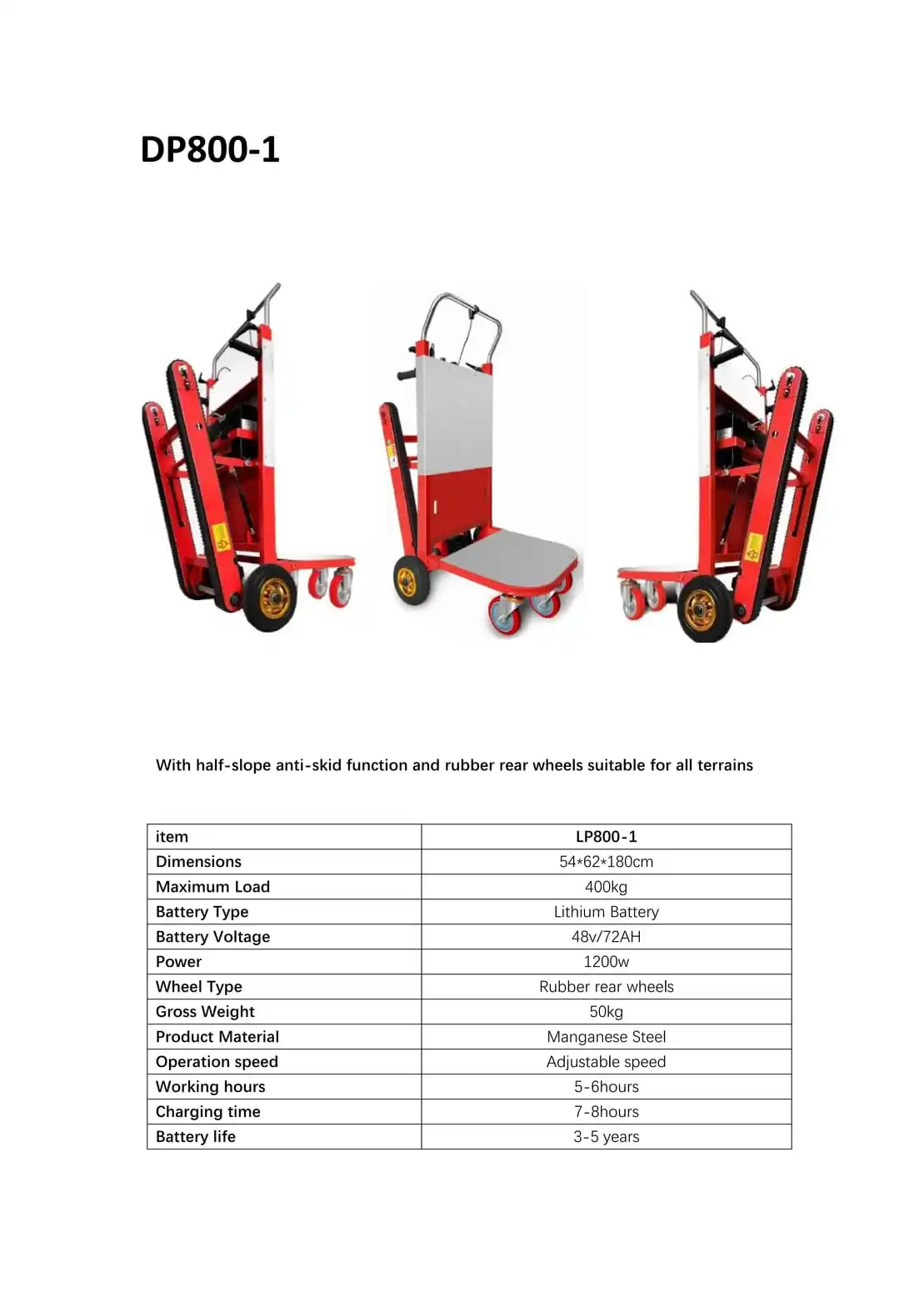
For decades, the standard-issue tool for moving heavy loads up stairs was simple: a two-wheel hand truck, a strong back, and hope. Today, electric stair climbers are rapidly replacing manual hand trucks — and the economics make the switch inevitable.
What is the difference? A hand truck requires the operator to provide all lifting force. An electric stair climber climbs stairs under its own power — the operator only needs to balance and guide the load. The difference in physical effort, speed, and injury risk is dramatic.
1. Safety: The Hidden Cost of Manual Stair Climbing
The statistics are sobering:
- Manual material handling accounts for 32% of all workplace musculoskeletal disorders (OSHA)
- Lower back injuries cost U.S. employers $12–15 billion annually
- A single severe back injury claim averages $40,000–$80,000 — more than the cost of a professional electric stair climber
2. Speed & Throughput: Time Is Money on Every Staircase
| Metric | Hand Truck (2 operators) | Electric Climber (1 operator) |
|---|---|---|
| Trips per day | 8–10 | 15–20 |
| Labor cost/day | 16 person-hours | 8 person-hours |
| Productivity gain | 3–5× more deliveries per operator | |
3. Cost Analysis: The 3-Year ROI
For a logistics operation with 15 stair deliveries/day:
| Cost Category | Hand Truck (2 ops) | Electric Climber (1 op) |
|---|---|---|
| Equipment | $200–500 | $4,000–7,000 |
| Extra operator/year | +$35,000–50,000 | $0 |
| Workers' comp increase | $3,000–8,000/yr | $0–1,500/yr |
| 3-Year Total Cost | $120,000–200,000 | $8,000–15,000 |
The ROI is not subtle. Even in the most conservative scenario, an electric stair climber pays for itself within 2–4 months through labor savings alone.
4. Operator Experience & Retention
Manual stair delivery is one of the hardest jobs in logistics. Turnover is 40–60% annually. With an electric climber, operator fatigue drops dramatically and turnover falls to 15–25%. Replacing a delivery driver costs $4,000–$8,000 — the climber pays for itself on retention alone.
5. Load Capability: Manual Has Hard Limits
The inflection point is ~75 kg. Below that, a manual hand truck is viable for occasional use. Above that — or for any regular stair delivery — electric power is the only safe, sustainable choice. Electric climbers routinely handle 200–800 kg with a single operator.
When a Manual Hand Truck Still Makes Sense
- Loads under 50 kg, sporadic deliveries (a few times per week)
- No stairs involved — a standard hand truck on level ground is faster and cheaper
- Extremely tight spaces that challenge even compact crawler models
Related guide: Commercial and industrial stair-climber selection
Related: Electric Stair Climber Buyer Guide · Small Electric Forklift Guide